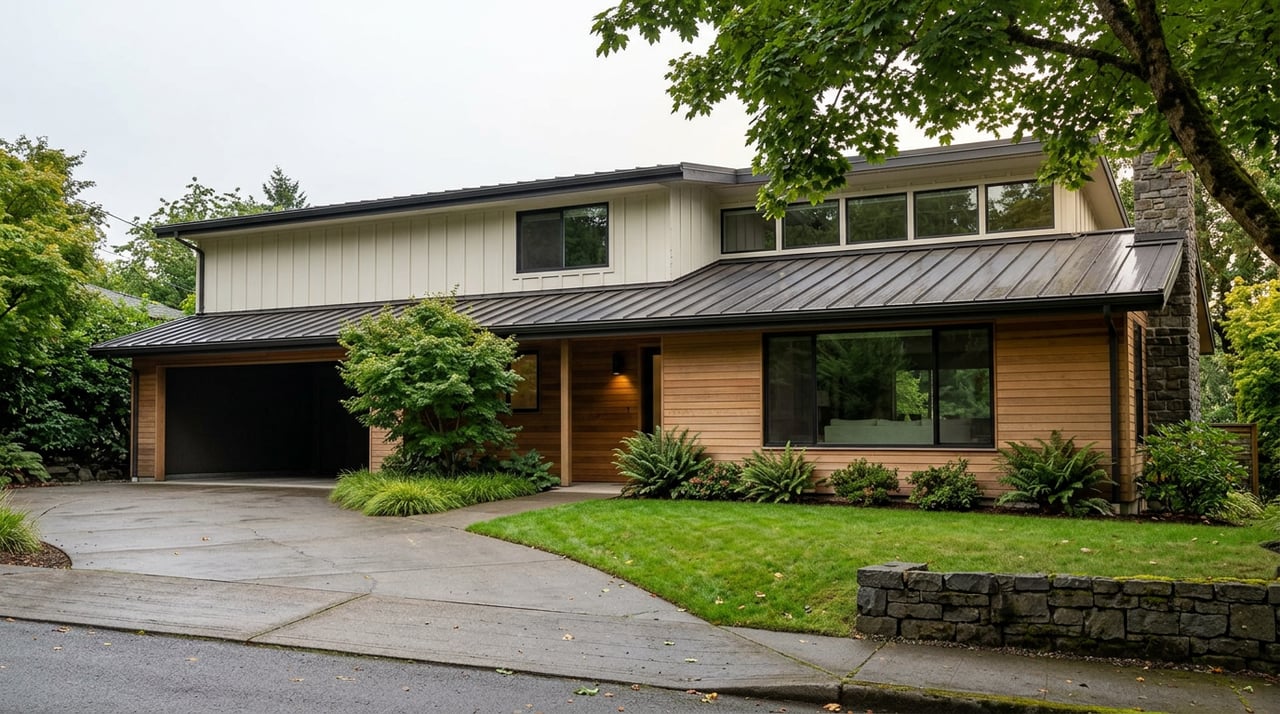
Alabama Hill Fall Walks for Whatcom Creek Salmon
August 6, 2026
August 6, 2026
You already know the Alabama Street overpass. You cross under it on the way to Barkley, or you park at the pullout and walk the dog north toward Whatcom Falls Park without thinking twice about it. For most of the year that bridge is just infrastructure. For the next six weekends it is the front door to one of the most concentrated wildlife events happening inside city limits, and almost nobody on this side of the hill treats it that way.
The thesis of this piece is small and specific. Alabama Hill's trail network is not a "nice amenity near Whatcom Falls." It is a private on-ramp to a Chinook return that pulls anglers, birders, and school field trips from every other neighborhood in Bellingham. You can walk to it in trail shoes. They have to drive.
The city's own trail documentation lays it out plainly. The Railroad Trail provides a multi-use trail and greenway corridor with a safe overpass of Alabama Street and connection to Whatcom Creek Trail. That single sentence is the reason the hill's walking geography is different from every other east-side neighborhood. Pair it with the two pocket parks most non-residents never learn the names of, St. Clair Park and Highland Heights Park, and you have a walking loop that starts at your driveway and ends at a working fish ladder without ever asking you to get in the car.
The connective tissue is not theoretical. On the city trail map, the Railroad Trail, Alabama Bridge, St. Clair Park, and Whatcom Falls Park all show up as connected features, which is why you can leave the house at 8 a.m. on a Saturday in September and be standing over spawning Chinook before your coffee cools.
A run forecast is not weather. It is a fisheries projection, and this year's Whatcom Creek number is worth writing on the fridge. The 2026 Whatcom Creek return forecast is 6,582 hatchery Chinook, with these fish typically arriving in inner Bellingham Bay and the area around the creek mouth in late-August or early-September after the first rain, or "freshet", raises the water level in the creek.
That "first rain" clause is the one every non-angler misses. The fish do not arrive on a schedule. They arrive on a weather event. Watch the forecast for the first meaningful rainfall after August 20 and plan the walk for the following weekend.
The in-creek fishery has a hard window this year:
| Window | Days open | Details |
|---|---|---|
| Aug 2 – Sept 27, 2026 | Saturdays and Sundays only | Whatcom Creek hatchery Chinook fishery in downtown Bellingham; 12" minimum size, daily limit 2 hatchery Chinook; night closure and anti-snagging rule |
If you have no interest in fishing, that table is still useful. It tells you which mornings the banks at the creek mouth will be shoulder-to-shoulder and which weekdays you will have the trail almost to yourself. A quiet Tuesday walk in mid-September is the sleeper move.
For context on why the run exists at all, the hatchery is a story most Alabama Hill residents have never heard. Bellingham Technical College has run the fish hatchery at the mouth of Whatcom Creek in Maritime Heritage Park since 1978, after the former wastewater treatment plant was converted. Officials said when they took over the hatchery, there were no natural salmon runs in the creek. Today, it has multiple healthy runs of salmon species, according to BTC. The fish returning to the pool below your feet were released here as juveniles by a partnership that includes WDFW's Samish River Hatchery, Bellingham Technical College, and Lummi Nation.
Not fishing spots. Watching spots. The distinction matters, because the fishing crowd concentrates at the tidewater wall and the watching is better upstream.
1. The stone bridge at Whatcom Falls Park. This is the postcard. The Works Progress Administration built the Stone bridge in 1940 using repurposed Chuckanut sandstone. From the bridge you will get a great view of Whatcom Falls. Late September and October, Chinook stage in the pool below the falls before their final push. Show up between 9 and 10 a.m. on a bright day and the water is clear enough to count fins.
2. The Wayside Trail above Dupont Street. From the falls, the trail climbs on stairs that hug the hillside and offer great views of the top of the falls. Crossing over Dupont Street, we headed into the trees and began our walk on the Wayside Trail. This is where the salmon-viewing gets private. The banks here are steep, the crowd thins out, and the fish are working hard against gradient you can see.
3. The fish ladder at Maritime Heritage Park. Worth the extra 20 minutes of walking or a five-minute drive. Below is the short ladder for those salmon on their own, uninterrupted, journey. Volunteers and staff are onsite to help take the chosen ones and put them in a tube to deliver them to a holding pen. If you have kids or visiting grandkids, this is the stop that gets remembered.
Here is the part of the trail almost no one on the hill can name, even after ten years of dog walks. There is a permanent sculpture route braided through the Wayside Trail called the Salmon Art Trail. Two pieces are worth knowing by name.
The first is Eagle Totem (Mike McRory, 2000, cedar) poking its' head out of the bushes, with a frog holding on to his strong chest. The second is a set of steel fish you have almost certainly seen without registering: Walking with the Returning Salmon (Steve Seymour, 1997, steel) sculptures gives an interesting perspective as you make your way along the wide trail. The fish leap over the natural barriers as they make their way upstream. The sculptures blend into the surroundings so well, that the unobservant passerby may not even notice their presence.
Give yourself the small pleasure of finding all of them on one walk. It changes the trail.
Whatcom Creek is not a wild stream doing wild things on its own. It is a heavily managed system that residents have been rebuilding for three decades. Whatcom Creek drains an area of approximately 7.7 square miles, originating from Lake Whatcom. The stream flows from Lake Whatcom, east to west for approximately 4.3 miles before reaching Bellingham Bay. The riparian corridor you walk through was largely replanted after the 1999 pipeline fire, and since 2003, the City-sponsored WCC crews have planted over 100,000 native shrubs and trees, removed thousands of yards of invasive plants, and restored numerous sites in the riparian corridor along lower Whatcom Creek.
That is the context for why the ferns and salal along the trail look so uniform in places. They were planted, deliberately, by named crews, in your lifetime.
The neighborhood's underrated advantage is that the trailhead is a five-minute drive from a real dinner. Three options within a mile of the Alabama Street overpass, worth naming because most weekend guides send you downtown:
The walking sequence that actually uses the neighborhood the way it was designed: leave from home, pick up the Railroad Trail, cross the Alabama Street overpass, cut through St. Clair Park, drop into Whatcom Falls Park at the stone bridge, watch the pool for fifteen minutes, climb the stairs to the Wayside Trail, find at least three pieces of Salmon Art, and turn back at Dupont. Two to three hours depending on how long you stand on the bridge. Add lunch on Lakeway. That is a full Saturday most of your neighbors are getting into the car to reproduce somewhere else.
If salmon-run weekends are the moment your household starts thinking seriously about how much house the hill's trail access is really worth, or whether the home you have now is set up to hold the next chapter, that is a conversation Michelle Harrington has been having with Alabama Hill owners for 23 years. Get Your Instant Home Valuation and we can start with what your address is worth this fall.
Stay up to date on the latest real estate trends.
1318 12TH ST BELLINGHAM WA 98225