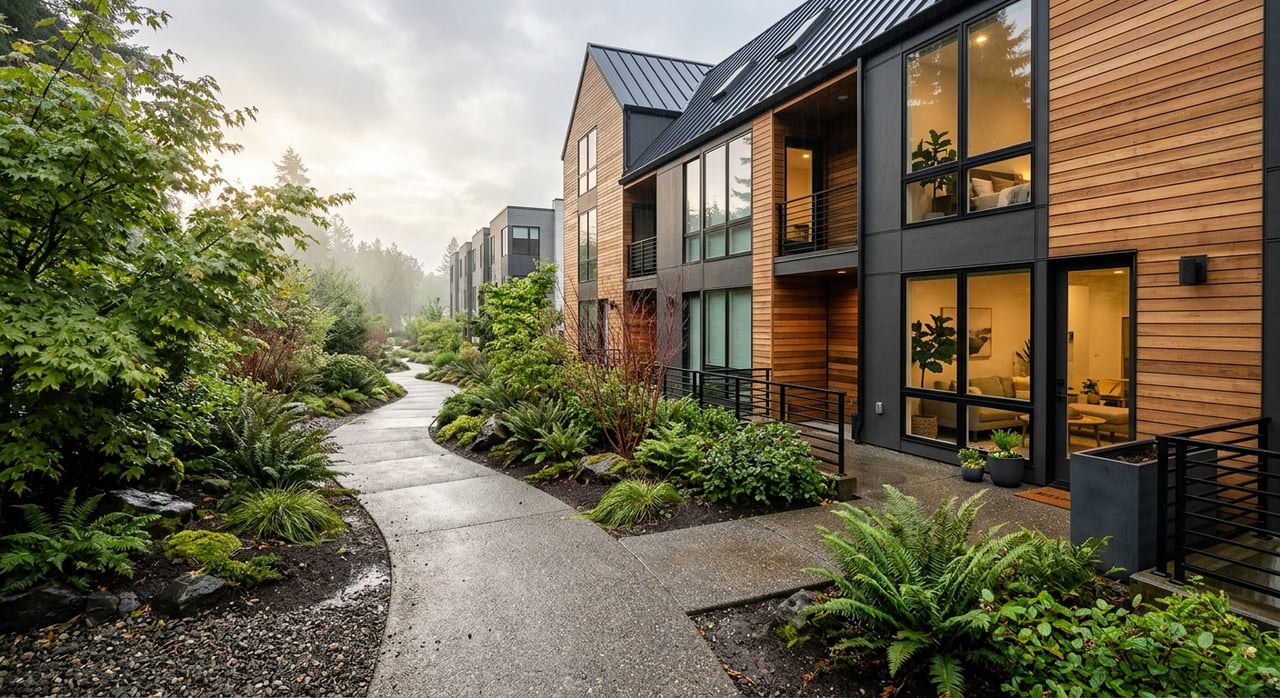
What Barkley Village Living in Bellingham Feels Like
July 9, 2026
July 9, 2026
Looking for a Bellingham neighborhood where you can run errands, get outside, and still feel connected to the city without spending your whole day in the car? Barkley Village stands out for exactly that reason. If you are exploring where to live in the 98226 area, this guide will help you picture what daily life can actually feel like here. Let’s dive in.
Barkley Village is one of Bellingham’s seven urban villages, and the city plans for these areas to absorb a meaningful share of future growth in a relatively small footprint. In simple terms, that means Barkley is designed to bring homes, jobs, services, and public spaces closer together.
Today, Barkley Village is a modern mixed-use district of roughly 255 to 259 acres. City planning documents describe a neighborhood with more than 2,000 jobs and more than 100 businesses, including retail, restaurants, healthcare, financial services, government offices, and social service organizations.
That mix shapes the feel of the area. Instead of reading like a purely residential subdivision, Barkley often feels more like a live-work neighborhood where daily life can happen in one connected place.
A day here can start simply. With a documented mix of food-service businesses, local shops, grocery options, healthcare, childcare, and fitness uses in the district, Barkley supports the kind of morning where you can grab breakfast, fit in a workout, or tackle an errand without traveling far.
That convenience matters if your schedule is full. Whether you work from home, commute, or are managing a household, having services clustered together can make the day feel easier and more efficient.
Transit also adds to that flexibility. WTA’s Gold Line serves Barkley Village as part of Bellingham’s high-frequency network, giving you another option for getting around.
One of Barkley Village’s biggest strengths is that it is not just a place to sleep at night. City materials describe a broad mix of industrial, retail, professional office, and residential uses, which supports a stronger live-work identity than many newer neighborhood centers.
If you work nearby, that can mean a shorter commute and more freedom in how you structure your day. If you do not work in Barkley itself, you still benefit from being close to offices, services, and everyday necessities.
The district also includes the Barkley Branch of the Bellingham Public Library. That adds another practical stop to the day, whether you are picking up materials, attending a program, or just enjoying a quick change of pace.
For many buyers, convenience is not about luxury. It is about time. Barkley Village’s concentration of businesses and services can help simplify everyday routines, which is a real quality-of-life benefit.
The official directory supports a broad mix of uses, including groceries, retail, healthcare, and personal services. That means many of the things you need in a typical week may be closer than you expect.
This setup can appeal to a wide range of homeowners and residents. You might be relocating to Bellingham, downsizing into a lower-maintenance home, or simply looking for a neighborhood where errands do not have to become a separate outing.
What gives Barkley Village a distinctly Bellingham feel is its connection to the trail system. This is not just a commercial center with sidewalks. It is a neighborhood where walking and biking are built into the experience.
Barkley Village sits next to Bellingham’s Rail Trail, and trail information for the district notes that connections lead directly into Haggen, the Barkley gazebo, and Scramble Nature Playpark without needing to drive. That kind of access changes how the neighborhood functions from day to day.
You can head out for a short walk after work, meet up at the park, or use the trail network as part of your routine instead of as a special weekend activity. For many people, that is the difference between wanting outdoor access and actually using it.
The Barkley Urban Village plan places major importance on the existing Railroad Trail and calls for added multi-use trail connections. This reinforces the idea that the neighborhood is being shaped around pedestrian and bike access, not just vehicle traffic.
That planning direction matters if you are thinking long term. It suggests Barkley’s walkability and connectivity are not accidental. They are part of the area’s future.
The newly completed Sunset Pond Trail adds another layer of connectivity. According to Barkley Village trail information, it links Barkley to the Squalicum Creek Trail and future Bellingham Bay connections.
For residents, that means the trail network is growing into something even more useful and enjoyable. It supports the feeling that Barkley is connected not only within itself, but to the broader Bellingham landscape.
Scramble Nature Playpark is one of Barkley Village’s standout public spaces. Located at Woburn and E. Illinois Street, the city describes it as a neighborhood park with natural play elements, trails, play equipment, picnic tables, restrooms, and parking.
That mix makes it more than just a quick playground stop. It is the kind of place that can fit into regular life, whether you want a casual outdoor break, a meet-up spot, or a place to spend part of a weekend afternoon.
For buyers comparing Bellingham neighborhoods, parks like this can say a lot about how a community functions. They give the area a more livable rhythm and create natural gathering points without requiring a major outing.
Inside Barkley Village proper, city planning documents report 484 dwelling units. Of those, 89% are apartments, 9% are condos, and 2% are single-family homes.
That breakdown helps explain the neighborhood’s urban feel. Barkley Village is not dominated by detached houses. It is shaped more by a compact residential pattern that supports nearby businesses, jobs, and trail access.
If you are looking at the broader Barkley area, it is worth knowing that the larger Barkley Neighborhood extends well beyond the urban village itself. The city describes the surrounding neighborhood as 814 acres with mixed land uses, and notes that Barkley Boulevard includes newer homes on the west-facing slope of Alabama Hill with expansive city and bay views.
Barkley Village is still evolving, but the growth story is not just about adding buildings. City planning for the area also emphasizes more housing, more public spaces, better pedestrian and bike connections, and preservation of about 40 acres of wetlands and forested habitat.
That balance is a big part of Barkley’s appeal. You get an urban-style neighborhood structure while still being connected to trails, habitat, and the natural setting that makes Bellingham so distinctive.
The urban village plan also places Barkley on a ridge between the Squalicum Creek and Whatcom Creek watersheds, both of which flow to Bellingham Bay. That topography helps explain why the broader area can feel open, connected, and visually tied to the landscape.
Barkley Village can make sense for buyers who want a more connected daily routine. If you value nearby services, trail access, transit options, and a neighborhood with a modern mixed-use feel, it checks a lot of boxes.
It may also appeal if you are relocating and want an easier on-ramp into Bellingham living. Being close to shops, services, library resources, and outdoor amenities can help a new city feel more manageable very quickly.
At the same time, the right fit depends on your goals. Some buyers want a quieter residential setting with a different housing mix, while others are specifically drawn to Barkley because it feels active, practical, and connected.
Barkley is one of those areas where broad descriptions only go so far. The urban village itself, the surrounding Barkley neighborhood, nearby condo options, and adjacent single-family areas can each offer a different living experience.
If you are weighing a move here, it helps to talk with someone who understands how these micro-locations function in real life. That includes commute patterns, housing style differences, trail proximity, and how each pocket connects to the rest of Bellingham.
With more than 23 years of local experience and over 1,000 closed transactions, Michelle Harrington helps buyers and sellers make sense of neighborhood choices with clear, practical guidance. If you are curious about Barkley Village or the broader 98226 market, Michelle Harrington can help you find the right fit.
Stay up to date on the latest real estate trends.
1318 12TH ST BELLINGHAM WA 98225